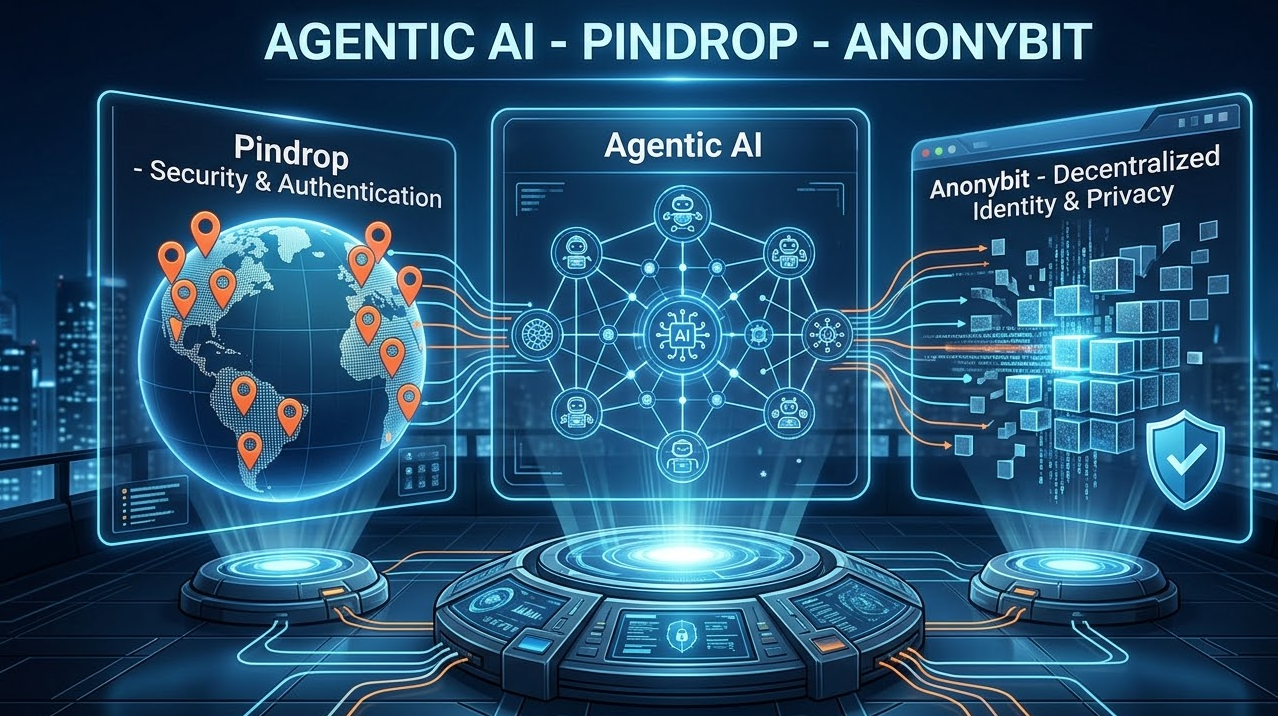
Artificial intelligence is transforming cybersecurity and digital identity at an unprecedented pace. As organizations move toward automated decision-making systems, the need for reliable identity verification and fraud prevention technologies has become critical. This is where the concept of agentic ai pindrop anonybit enters the conversation. By combining agentic AI capabilities with advanced voice authentication and decentralized biometric identity platforms, businesses can create intelligent security systems that operate autonomously while protecting user privacy.
In today’s digital economy, companies must verify identities quickly while preventing sophisticated fraud attempts. Traditional security systems that rely only on passwords or static verification methods are no longer sufficient. Instead, emerging solutions integrate agentic artificial intelligence, behavioral analytics, biometric authentication, and privacy-preserving identity frameworks.
Technologies developed by companies like Pindrop and Anonybit illustrate how modern cybersecurity tools combine AI automation, voice recognition, decentralized biometrics, and real-time risk analysis. When these technologies intersect with agentic AI systems—AI agents capable of independent reasoning and decision making—they create powerful authentication ecosystems capable of defending against fraud while maintaining strong privacy standards.
This article explores the concept of agentic ai pindrop anonybit, examining how these technologies work together, their role in digital identity management, and how organizations can leverage them to build secure, intelligent authentication infrastructures.
Understanding Agentic AI and Its Role in Cybersecurity
What Is Agentic AI?
Agentic AI refers to artificial intelligence systems designed to operate as autonomous agents capable of making decisions, executing tasks, and adapting to dynamic environments without constant human supervision. Unlike traditional AI models that simply analyze data or respond to queries, agentic AI systems can plan, reason, and take action toward defined goals.
In cybersecurity and digital identity management, agentic AI can monitor authentication processes, detect anomalies, and automatically respond to threats. Instead of relying solely on static rule sets, these intelligent agents continuously learn from patterns in user behavior, communication signals, and system interactions.
Also Read:Cinderous Soulcaller Iron’s Spells A Complete Guide to Their Power, Lore, and Strategy
The growing interest in agentic ai pindrop anonybit technologies stems from their potential to combine autonomous intelligence with advanced identity verification methods. This allows organizations to build security systems that can respond to fraud attempts in real time while maintaining seamless user experiences.
Why Agentic AI Matters for Identity Verification
Modern digital ecosystems require security solutions that operate at scale. Millions of login attempts, voice interactions, and financial transactions occur daily across banks, telecommunications providers, and online platforms.
Agentic AI offers several advantages in identity verification systems.
It can analyze complex datasets across multiple authentication layers simultaneously. Instead of checking only passwords or tokens, AI agents can evaluate voice patterns, biometric signals, behavioral characteristics, device fingerprints, and network activity.
Agentic AI also enables adaptive security. If an authentication request appears suspicious, the system can escalate verification requirements automatically, adding extra biometric or behavioral checks without manual intervention.
Another important benefit is automated fraud mitigation. When agentic AI detects anomalies that indicate potential identity theft or account takeover, it can immediately trigger defensive actions such as blocking access, initiating secondary verification, or alerting security teams.
These capabilities make agentic AI an essential component of modern identity security infrastructures.
The Role of Pindrop in Voice Authentication and Fraud Detection
What Is Pindrop?
Pindrop is a cybersecurity and voice intelligence company known for its work in voice authentication and call-center fraud prevention. The company uses advanced audio analysis, machine learning, and behavioral modeling to identify callers and detect fraudulent activity in voice interactions.
Voice communication remains one of the most widely used customer service channels, especially in industries like banking, insurance, and telecommunications. However, voice channels also present significant fraud risks. Attackers often attempt social engineering attacks by impersonating legitimate customers.
Pindrop’s technology analyzes hundreds of characteristics within a voice signal, including acoustic patterns, speech cadence, and device attributes. These signals help determine whether a caller is genuine or potentially fraudulent.
Voice Biometrics in the Age of Agentic AI
Voice biometrics have become increasingly valuable as organizations adopt conversational AI systems and voice assistants. By integrating voice authentication with agentic AI frameworks, businesses can automate identity verification while maintaining strong security.
Within an agentic ai pindrop anonybit ecosystem, voice authentication can serve as one layer of a multi-factor identity verification system. AI agents analyze voice patterns during calls or voice interactions and compare them to previously registered voiceprints.
If anomalies appear—such as unusual speech characteristics or suspicious call routing patterns—the system can trigger additional verification steps automatically.
This combination of agentic AI and voice biometrics significantly reduces the risk of call-center fraud while improving customer experience by minimizing manual verification processes.
Also Read:Alfonsina Storni Estilo y Formas A Deep Exploration of Her Poetic Voice
Detecting Synthetic Voice Attacks
One of the emerging threats in voice authentication systems is the rise of synthetic voice technology. AI tools can now generate highly realistic voices capable of imitating real individuals.
Pindrop addresses this challenge by analyzing subtle audio artifacts that often appear in synthetic speech. These patterns can reveal whether a voice sample was generated by artificial intelligence or recorded from a human speaker.
When integrated into agentic AI frameworks, these detection mechanisms allow autonomous systems to identify deepfake voice attacks and prevent fraudulent access attempts.
Anonybit and the Rise of Decentralized Biometric Identity
What Is Anonybit?
Anonybit focuses on privacy-preserving biometric authentication. The company developed a decentralized biometric identity platform designed to protect sensitive biometric data while enabling secure identity verification.
Unlike traditional biometric systems that store fingerprint or facial data in centralized databases, Anonybit uses distributed architecture. Biometric templates are split into fragments and stored across multiple secure nodes.
This architecture significantly reduces the risk of large-scale data breaches because attackers cannot reconstruct biometric identities without accessing multiple fragments simultaneously.

Privacy-First Identity Verification
The importance of privacy in digital identity systems continues to grow as data protection regulations become stricter worldwide.
Anonybit’s technology ensures that biometric data never exists as a complete record in a single location. This approach protects individuals from identity theft while allowing organizations to authenticate users quickly and securely.
Within the agentic ai pindrop anonybit framework, decentralized biometrics can serve as another verification layer alongside voice authentication and behavioral analytics.
Agentic AI systems can coordinate these identity signals to determine whether a user should be granted access, all while maintaining strict privacy protections.
How Agentic AI, Pindrop, and Anonybit Work Together
A Multi-Layered Identity Security Framework
Combining agentic AI, Pindrop voice authentication, and Anonybit decentralized biometrics creates a powerful identity verification ecosystem.
In such a system, AI agents continuously monitor user interactions and evaluate multiple identity signals. These signals may include voice patterns during phone calls, biometric identifiers such as fingerprints or facial recognition, behavioral metrics like typing speed or navigation patterns, and device or network fingerprints.
Instead of relying on a single authentication factor, the system uses layered verification. Agentic AI orchestrates these components and determines whether the overall identity confidence score meets security thresholds.
If anomalies occur in any layer, the AI agent can escalate verification procedures or block access attempts.
Real-Time Fraud Prevention
Financial institutions and digital platforms increasingly rely on real-time fraud detection systems. Traditional security processes often review suspicious activity after transactions occur, which allows fraud to succeed before it is detected.
Agentic AI solves this problem by continuously analyzing identity signals during authentication and transactions.
Also Read:The Letter P History, Meaning, Sound, and Modern Significance
For example, when a user contacts a bank’s call center, Pindrop’s voice authentication technology analyzes the caller’s voiceprint while Anonybit verifies biometric identity using decentralized data fragments.
Agentic AI evaluates these signals instantly. If everything matches expected patterns, the user gains seamless access. If discrepancies appear, the system initiates additional checks or blocks the interaction.
This approach reduces fraud losses and improves operational efficiency.
Applications of Agentic AI Pindrop Anonybit in Industry
Banking and Financial Services
Financial institutions are among the most frequent targets of identity fraud. Banks process millions of account logins, phone interactions, and financial transactions daily.
Integrating agentic ai pindrop anonybit solutions allows banks to authenticate customers using voice biometrics, decentralized biometric data, and behavioral analysis.
This combination protects against common fraud scenarios such as account takeovers, social engineering attacks, and synthetic identity fraud.
Telecommunications and Call Centers
Call centers handle sensitive customer data and often rely on manual identity verification processes that involve security questions.
Voice authentication technology from Pindrop can automatically verify callers while agentic AI monitors behavioral patterns and call characteristics.
Anonybit’s privacy-preserving biometric system can add additional authentication layers, creating a secure yet frictionless customer support experience.
Digital Platforms and Online Services
Online platforms, including fintech applications, social networks, and cloud services, require secure identity verification systems that scale globally.
Agentic AI frameworks can manage authentication workflows across millions of users, while biometric and voice verification technologies provide reliable identity confirmation.
The agentic ai pindrop anonybit model helps organizations balance strong security with user convenience.
Security Challenges Addressed by Agentic AI Identity Systems
Synthetic Identity Fraud
Synthetic identities combine real and fake information to create fraudulent accounts. These identities can bypass traditional verification methods.
Agentic AI systems analyze multiple signals simultaneously, making it far harder for attackers to fabricate a complete digital identity.
Also Read:D9-H-Coal-Dozer The Ultimate Guide to Performance, Applications, and Value in Coal Operations
Deepfake Voice Attacks
AI-generated voices have become increasingly realistic. Voice authentication systems enhanced by Pindrop technology can detect subtle anomalies that reveal synthetic audio.
Agentic AI systems further strengthen defense by comparing voice signals with other biometric and behavioral data.
Biometric Data Breaches
Centralized biometric databases present significant security risks. If compromised, biometric identifiers cannot be changed like passwords.
Anonybit’s decentralized architecture reduces this risk by fragmenting biometric data across secure nodes.
Benefits of the Agentic AI Pindrop Anonybit Approach
Organizations adopting the agentic ai pindrop anonybit framework gain several advantages.
Security improves dramatically because identity verification relies on multiple signals rather than single authentication factors.
User experiences become smoother because automated systems verify identities without lengthy manual processes.
Privacy protections increase through decentralized biometric storage and intelligent data governance.
Operational efficiency also improves as AI agents automate fraud detection and identity verification workflows.
The Future of Intelligent Identity Security
The future of digital identity will likely involve autonomous AI agents managing complex authentication ecosystems.
Agentic AI systems will coordinate biometric authentication, behavioral analytics, device identification, and decentralized identity frameworks.
Voice authentication technologies will become more sophisticated, detecting synthetic speech and deepfake audio with greater accuracy.
Privacy-preserving identity platforms will continue evolving to meet global regulatory requirements while enabling secure digital interactions.
Together, these innovations represent the evolving landscape of agentic ai pindrop anonybit technologies.
Best Practices for Implementing Agentic AI Identity Solutions
Organizations considering these technologies should focus on several key principles.
Security architecture should include multiple authentication layers to prevent single-point vulnerabilities.
Privacy protection must remain a central priority, especially when handling biometric data.
Continuous monitoring and AI training are essential to ensure that agentic systems adapt to new fraud patterns.
Companies should also conduct regular security audits and compliance assessments to ensure adherence to data protection regulations.
Conclusion
The intersection of autonomous artificial intelligence, voice authentication, and decentralized biometric identity systems represents one of the most promising developments in cybersecurity. The concept of agentic ai pindrop anonybit illustrates how advanced technologies can work together to create intelligent, privacy-focused authentication ecosystems.
Agentic AI provides the decision-making intelligence that orchestrates identity verification processes. Voice authentication technologies from Pindrop strengthen security in voice interactions and call centers. Decentralized biometric identity platforms from Anonybit protect sensitive data while enabling reliable user authentication.
Together, these technologies create a powerful multi-layered identity security model capable of detecting fraud in real time while maintaining seamless user experiences. As digital interactions continue expanding across industries, the importance of secure and privacy-preserving identity verification will only increase.
Organizations that adopt these advanced solutions today will be better prepared to protect their systems, customers, and data in the rapidly evolving digital landscape.
FAQs
What does agentic AI mean in identity security?
Agentic AI refers to autonomous artificial intelligence systems capable of analyzing identity signals, detecting fraud patterns, and making security decisions without constant human intervention.
How does Pindrop improve authentication?
Pindrop uses voice biometrics and audio analysis to identify callers and detect fraudulent voice interactions in real time.
What makes Anonybit different from traditional biometric systems?
Anonybit uses decentralized architecture that fragments biometric data across multiple secure nodes, reducing the risk of large-scale biometric data breaches.
Why is combining these technologies beneficial?
Combining agentic AI with voice authentication and decentralized biometrics creates a multi-layered identity verification system that improves security, privacy, and user experience simultaneously.
Is agentic AI widely used today?
Agentic AI is an emerging technology. Many organizations are beginning to integrate autonomous AI systems into cybersecurity and identity management frameworks, and adoption is expected to grow rapidly in the coming years.
For more updates visit: blogify News