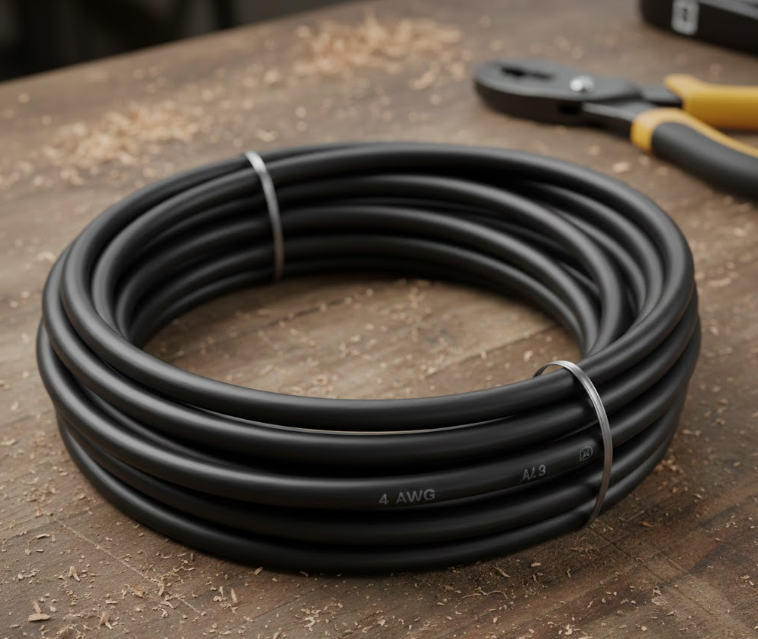
Electrical wiring is the backbone of every modern building, vehicle, and industrial facility. When projects demand strength, reliability, and higher current capacity, 4 AWG wire often becomes the preferred choice. Whether you are upgrading a residential service panel, installing a subpanel, wiring a high-power inverter, or setting up a car audio system, understanding how this conductor works is essential for safety and performance.
In this comprehensive guide, we explore the specifications, ampacity ratings, materials, insulation types, common applications, and installation considerations of 4 AWG wire. Drawing from electrical standards, field experience, and industry best practices, this article provides in-depth knowledge to help you make informed decisions.
Understanding 4 AWG Wire in the American Wire Gauge System
The American Wire Gauge system, commonly referred to as AWG, standardizes wire sizes in North America. As the gauge number decreases, the diameter of the conductor increases. This means that 4 AWG wire is significantly thicker than 10 AWG or 12 AWG wire, enabling it to carry more electrical current with less resistance.
The diameter of 4 AWG copper wire is approximately 0.2043 inches, with a cross-sectional area of about 21.15 square millimeters. This relatively large diameter reduces voltage drop over longer distances and improves overall efficiency in high-current circuits.
In practical terms, 4 AWG wire strikes a balance between manageability and power capacity. It is robust enough for heavy-duty applications while remaining flexible enough for installation in panels, conduits, and battery systems.
Ampacity of 4 AWG Wire
Ampacity refers to the maximum current a conductor can safely carry without exceeding its temperature rating. The ampacity of 4 AWG wire depends on several factors, including conductor material, insulation type, ambient temperature, and installation method.
Under the National Electrical Code guidelines, 4 AWG copper wire typically carries between 70 and 95 amps, depending on insulation rating and temperature conditions. For example, THHN copper conductors rated at 75°C commonly support around 85 amps in typical installations. Aluminum 4 AWG wire carries less current, often around 65 to 75 amps under similar conditions.
It is essential to remember that ampacity charts provide baseline values. Real-world installations must consider derating factors such as bundled conductors, high ambient temperatures, and conduit fill limitations. Failing to account for these conditions can result in overheating and potential fire hazards.
Copper vs Aluminum 4 AWG Wire
Material choice significantly affects performance, cost, and installation requirements.
Copper 4 AWG wire offers superior conductivity, lower resistance, and greater mechanical strength. It performs better in tight spaces and handles heat efficiently. Because of its conductivity, copper wire can carry more current than aluminum of the same gauge.
Aluminum 4 AWG wire is lighter and more affordable, making it popular for feeder lines and service entrance cables. However, aluminum requires larger terminations and careful installation to prevent oxidation and loose connections. Proper anti-oxidant compounds and torque specifications are essential when working with aluminum conductors.
For residential subpanel feeders, copper is often preferred for reliability, while aluminum may be selected for cost savings in long runs.
Common Applications of 4 AWG Wire
The versatility of 4 AWG wire makes it suitable for a wide range of electrical systems. Its higher ampacity and manageable diameter allow it to serve both residential and commercial needs.
Also Read:4.7.11 Rock Paper Scissors CodeHS Complete Guide to Solving the Assignment
Residential Service and Subpanels
In residential settings, 4 AWG copper wire is frequently used to feed subpanels rated between 60 and 100 amps, depending on code compliance and conductor type. It is also used for large appliances, HVAC systems, and electric vehicle chargers that require substantial current capacity.
Solar Power Systems
Off-grid and grid-tied solar installations often rely on 4 AWG wire for connecting battery banks, inverters, and charge controllers. The lower resistance helps minimize voltage drop in DC systems where efficiency directly impacts performance.
Automotive and Marine Applications
In high-performance car audio systems, 4 AWG wire is commonly used to connect amplifiers to batteries. The thick conductor ensures stable voltage delivery under heavy load conditions. Marine systems also use this gauge for battery interconnects and inverter wiring due to its durability and current-handling capability.
Industrial Equipment
Industrial machinery, welders, and motor-driven equipment may require 4 AWG wire to support high starting currents. Its ability to withstand thermal stress makes it suitable for demanding environments.
Voltage Drop Considerations
Voltage drop occurs when electrical current loses energy as it travels through a conductor. Even with a large conductor like 4 AWG wire, long distances can cause measurable voltage loss.
Industry best practice recommends keeping voltage drop below three percent for branch circuits and five percent overall for feeder circuits. For example, a 4 AWG copper conductor running 100 feet at 80 amps may experience noticeable drop, particularly in low-voltage DC systems.
Calculating voltage drop involves understanding conductor resistance, length of run, and current load. Oversizing conductors beyond minimum ampacity requirements often improves efficiency and reduces energy waste over time.
Insulation Types and Ratings
The performance of 4 AWG wire depends not only on the conductor but also on its insulation.
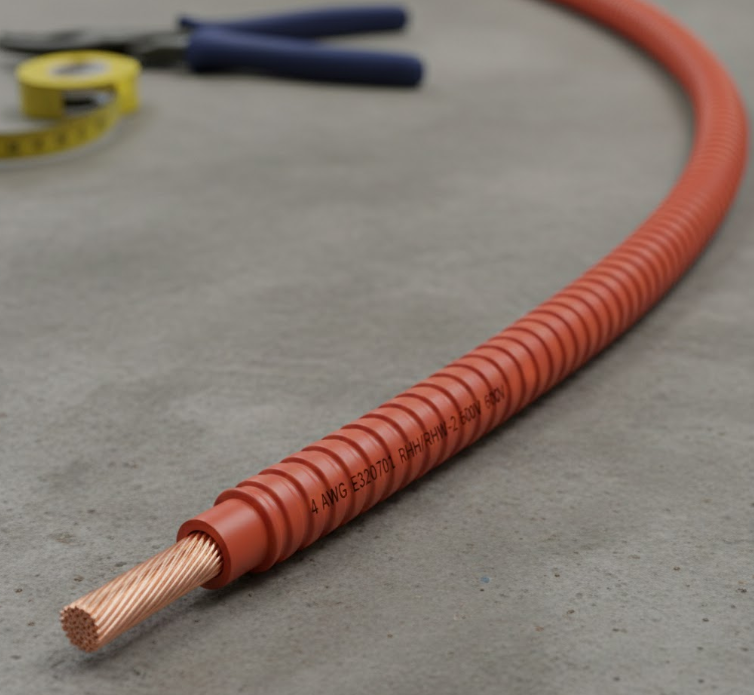
THHN and THWN insulation are common for building wiring. THHN is rated for high temperatures and is typically installed in conduit. THWN offers moisture resistance, making it suitable for damp or wet environments.
XHHW insulation provides enhanced durability and heat resistance, often used in industrial settings. Welding cable versions of 4 AWG wire feature flexible rubber insulation, ideal for mobile or vibration-prone applications.
Temperature ratings usually range from 60°C to 90°C. Selecting the correct insulation type ensures compliance with code requirements and environmental conditions.
Also Read:Viltnemnda: Norway’s Local Wildlife Management Authority Explained
Comparing 4 AWG Wire to Other Wire Sizes
Understanding how 4 AWG wire compares to neighboring sizes helps clarify its role in electrical systems.
Compared to 6 AWG wire, 4 AWG carries significantly more current and has lower resistance. This makes it better suited for higher-load circuits. In contrast, 2 AWG wire handles even greater current but is heavier, more expensive, and harder to manage during installation.
Choosing the correct gauge depends on load calculations, distance, and safety margins. Oversizing provides efficiency benefits but increases material cost.
Safety and Code Compliance
To ensure safety and legality, electrical work must align with local construction rules and national electrical standards. In the United States, the National Electrical Code sets guidelines for conductor sizing, ampacity, grounding, and overcurrent protection.
Using 4 AWG wire does not automatically guarantee safety. Proper breaker sizing is essential. For example, pairing a 4 AWG copper conductor with a breaker rated beyond its safe ampacity could result in overheating.
Grounding conductors, conduit fill ratios, and termination torque specifications must also meet code requirements. Consulting a licensed electrician ensures compliance and reduces risk.
Installation Best Practices
Proper installation practices extend the lifespan and safety of 4 AWG wire.
The conductor should be stripped carefully to avoid nicking strands. Terminals must be rated for the wire size and torqued according to manufacturer specifications. When routing through conduit, ensure adequate space to prevent overheating.
For battery and inverter installations, using appropriately rated lugs and heat shrink tubing improves reliability. Mechanical strain relief prevents stress on connections in mobile or high-vibration environments.
Routine inspections help identify loose connections or signs of insulation wear before they become serious hazards.
Cost Considerations and Market Trends
The cost of 4 AWG wire varies depending on material, insulation type, and market demand. Copper prices fluctuate based on global supply and demand dynamics. Aluminum versions typically cost less but may require additional hardware.
Bulk purchasing for large projects often reduces per-foot cost. However, price should never outweigh safety and compliance considerations. Investing in high-quality conductors prevents long-term issues and costly repairs.
As renewable energy adoption grows and electric vehicle charging becomes more common, demand for heavier gauge conductors like 4 AWG wire continues to increase.
Environmental and Efficiency Benefits
Using appropriately sized conductors contributes to energy efficiency. Lower resistance reduces heat generation and energy loss, which can improve overall system performance.
In solar and battery storage systems, efficient wiring translates directly into improved energy retention and system longevity. Over time, reduced losses can offset initial material costs.
Recyclability is another factor. Copper and aluminum are highly recyclable materials, making electrical wiring part of a sustainable infrastructure cycle.
Also Read:White Lab Complete Guide to Genetics, Temperament, Care, and Training
Troubleshooting Common Issues
Even with proper sizing, issues may arise. Overheating often indicates overloaded circuits or poor terminations. Corrosion at connection points can increase resistance and create voltage drop.
Periodic thermal imaging inspections in commercial settings help identify hotspots. In automotive systems, voltage testing under load confirms stable performance.
Addressing issues early prevents equipment damage and enhances safety.
When to Choose 4 AWG Wire
Selecting 4 AWG wire is appropriate when load calculations indicate currents above the safe range of smaller gauges. It is especially suitable for subpanel feeders, battery banks, heavy-duty equipment, and high-power DC applications.
Professional load calculations consider continuous versus non-continuous loads, ambient temperature, and installation environment. Consulting code tables ensures compliance.
The Future of Heavy Gauge Conductors
As infrastructure modernizes, electrical demand continues to rise. Electric vehicle chargers, heat pumps, and renewable energy systems require robust wiring solutions. Conductors like 4 AWG wire play a crucial role in supporting these evolving energy needs.
Advancements in insulation technology and conductor design continue to enhance durability and safety. With growing electrification worldwide, proper conductor sizing remains fundamental to reliable power distribution.
Conclusion
4 AWG wire represents a powerful and versatile solution for high-current electrical applications. Its balance of ampacity, durability, and flexibility makes it suitable for residential feeders, solar systems, automotive installations, and industrial equipment. Understanding its specifications, insulation types, voltage drop considerations, and code requirements ensures safe and efficient operation.
By selecting the correct material, following installation best practices, and adhering to electrical standards, you can maximize performance while maintaining safety. As energy demands increase and technology evolves, 4 AWG wire remains a dependable choice for modern electrical systems.
FAQs
What is the ampacity of 4 AWG wire?
Ampacity varies by material and insulation. Copper versions typically support around 85 amps under standard conditions, while aluminum versions carry slightly less.
Can 4 AWG wire handle 100 amps?
In some conditions and with specific insulation ratings, it may approach that capacity, but proper code verification and temperature ratings are essential.
Is 4 AWG wire suitable for solar battery banks?
Yes, it is commonly used in solar and off-grid systems due to its low resistance and high current capacity.
How far can 4 AWG wire run without significant voltage drop?
Distance depends on load and system voltage. Voltage drop calculations help determine appropriate run length.
Is copper better than aluminum for 4 AWG wire?
Copper offers better conductivity and strength, while aluminum provides cost savings for long feeder runs.
For more updates visit: blogify News